
In the global surge of apocalyptic populism, much attention has been directed toward the United States. Rightly so: Trumpism, with its rejection of liberal rationalism and embrace of conspiratorial and religious narratives, appears as a textbook case. But to assume that this phenomenon is confined to the American context is a mistake. Israel is no exception. In fact, Israel’s blend of military innovation, religious mythos, and settler-colonial anxiety may make it an even more potent site of apocalyptic populist energies.
Israel has long thrived on a narrative of exceptionalism. From its self-image as a refuge for the Jewish people after catastrophe, to its status as the “Startup Nation,” Israel portrays itself as simultaneously victim and victor, fragile and invincible. This exceptionalism is not merely nationalistic; it is deeply theological. The belief in being chosen, in redemptive suffering, and in a divine historical arc places Israeli discourse in close proximity to messianic logic. The Mashiach, after all, is not a metaphor in Israeli politics. For many, he is real, imminent, and political.
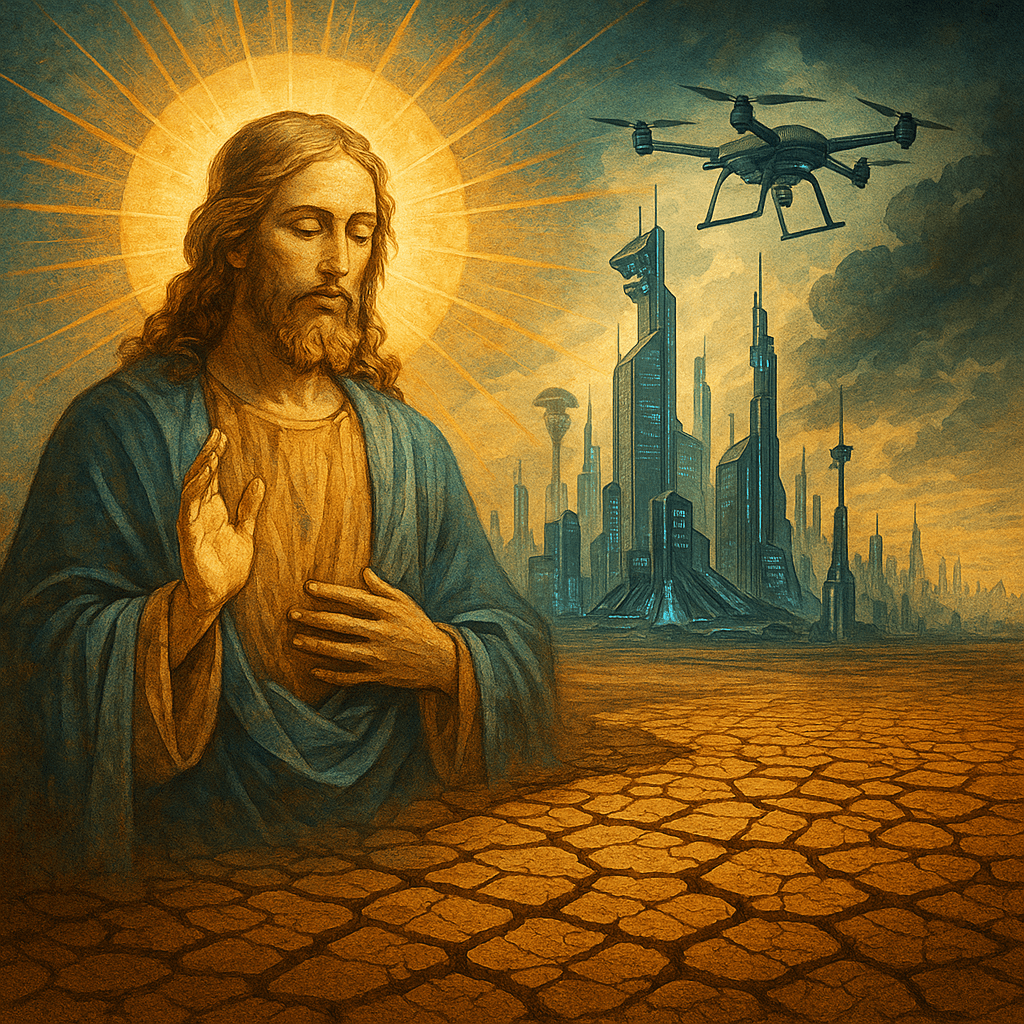
This messianic undertone becomes particularly dangerous when paired with climate despair. As the region faces increasing ecological instability—drought, extreme heat, resource scarcity—there is little in the way of ecological policy grounded in global justice or humility. Instead, climate anxiety is often sublimated into apocalyptic readiness: more technology, more militarization, more surveillance, more walls. The land will be saved, if at all, not through solidarity, but through force.
Here, the link between theological time and political time becomes clear. Just as the messiah will come at the end of days, so too must Israel prepare for a final, redemptive battle. This is not unique to Israel, of course—but Israel’s self-understanding as both ancient and futuristic intensifies the paradox. It is both God’s promise and Google’s playground. Zion and Silicon Valley.
What results is a form of apocalyptic populism: the fusion of national trauma, religious longing, technological utopianism, and ecological grief. This populism does not always speak its name. It can manifest in climate denial, in chants of “Am Yisrael Chai,” in the normalization of permanent war. It is a refusal to admit vulnerability, a need to be redeemed by something greater than policy: divine intervention, AI supremacy, or both.
To resist this, we must first name it. Israel is not immune to the political theology of our time. It is shaped by the same forces: fear of decline, loss of moral center, and humiliation at the hands of a non-human intelligence that outperforms prophets and generals alike.
The future will be written either by those who double down on redemption fantasies, or those who dare to construct meaning without them.

 Leafy sees
Leave a Reply