
Here is the full application of Robert Jay Lifton’s Eight Criteria of Thought Reform to the current strategies of the Islamic Republic.
In our previous draft, we focused on the six most visible ones.
Here are all eight, applied specifically to the regime’s current crackdown and the psychology of the “Islamic Republic” as a totalist system.
1. Milieu Control
- The Concept: The control of all communication within an environment. The goal is to separate the individual from the outside world and conflicting information.
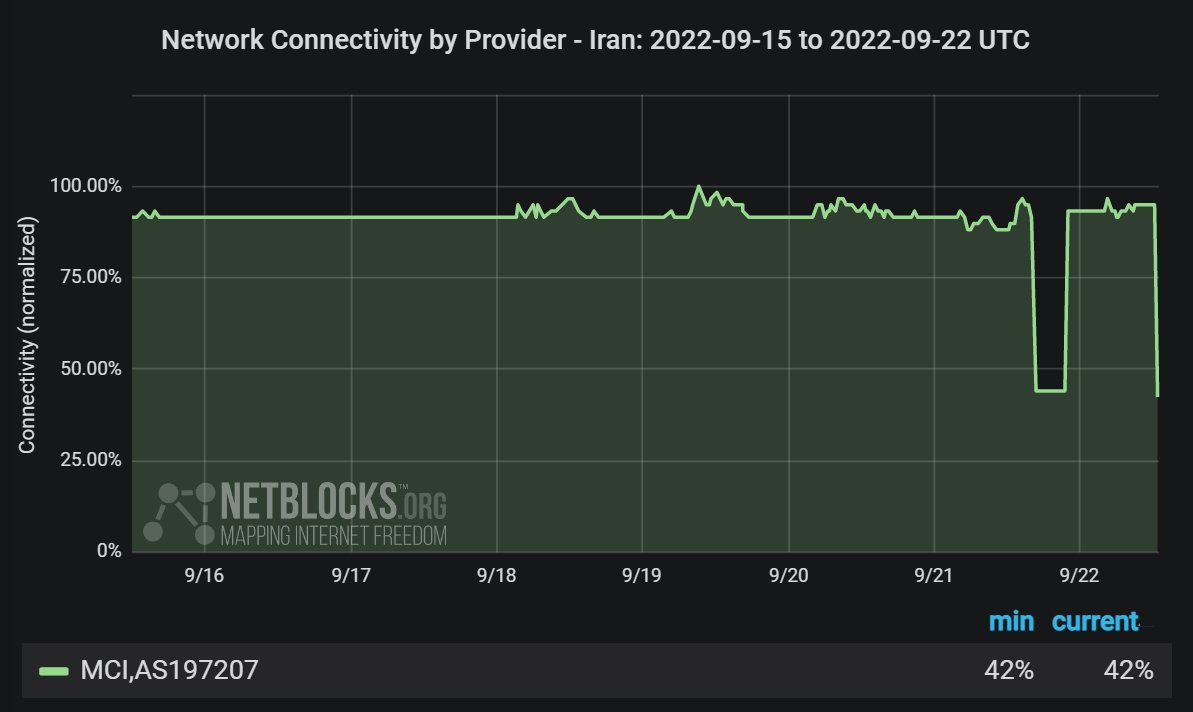
- Applied to Iran: The 17-day Internet Blackout is the ultimate form of Milieu Control.
- By cutting off Instagram, WhatsApp, and the global web, the regime creates a hermetically sealed environment where the only “news” comes from state TV (IRIB). It prevents “reality testing” against the outside world.
2. Mystical Manipulation (Planned Spontaneity)
- The Concept: The group constructs an aura of “higher purpose” or divine selection.
- Events that are carefully orchestrated (like rallies) are presented as spontaneous, mystical outpourings of the “will of the people” or God.
- Applied to Iran: The state-organized “pro-regime rallies” where government employees are bussed in to chant.
- These are theatrical performances designed to make the regime appear divinely ordained and popular, creating a “mystique” that the Supreme Leader is guided by hidden, spiritual forces.
3. The Demand for Purity
- The Concept: The world is divided sharply into “pure” (the group) and “impure” (everything else).
- This creates a constant sense of guilt and shame in the subject, who can never fully measure up to the group’s impossible standards.
- Applied to Iran: The Morality Police (Gasht-e Ershad) and the concept of Hijab. The regime projects all societal “impurity” onto women’s bodies. If you show hair, you are “polluting” society. This mechanism weaponizes shame to control behavior, making citizens feel they are always one slip-up away from being “corrupt.”
4. The Cult of Confession
- The Concept: The demand that individuals expose their “sins” (thoughts or actions against the group) to purge themselves. It dissolves the boundary between the private self and the state.
- Applied to Iran: The Televised Forced Confessions.
- As noted, these are not legal procedures; they are rituals of breaking the self.
- The prisoner must publicly renounce their own reality
- (“I was deceived,” “I am a spy”) to symbolically merge back with the State’s narrative.
5. The “Sacred Science”
- The Concept: The group’s ideology is presented as the ultimate moral and scientific truth. It is absolute and unquestionable. To question the leader is to question the laws of the universe (or God).
- Applied to Iran: The doctrine of Velayat-e Faqih (Guardianship of the Islamic Jurist). It is not treated as a political theory, but as divine law that supersedes the constitution or human rights.
- Questioning the Supreme Leader isn’t just “dissent”—it is framed as irrational and heretical, a rejection of “divine science.”
6. Loading the Language
- The Concept: Compressing complex problems into brief, thought-terminating clichés
- . These “god terms” (good) and “devil terms” (bad) stop critical thinking.
- Applied to Iran:
- Mofsed-e-filarz (Corruptor on Earth) – strips political meaning and replaces it with vague existential evil.
- Gharbzadegi (West-toxification) – dismisses any demand for rights as a foreign “disease.”
- Fitneh (Sedition) – frames protests as chaotic temptation rather than legitimate grievance.
7. Doctrine Over Person
- The Concept: When an individual’s lived experience conflicts with the ideology, the ideology is true and the experience is false. The person must rewrite their own memory to fit the doctrine.
- Applied to Iran: The Medical Gaslighting. When a family sees their child’s beaten body, the regime claims it was a “heart attack” or “suicide.”
- The family is forced to publicly accept the Doctrine (“The state protects us”) over their own Person/Experience (“The state killed my child”).
8. Dispensing of Existence
- The Concept: The group grants itself the right to decide who has the right to exist and who does not. Those outside the group are “non-people.”
- Applied to Iran: The Death Penalty for
- “Moharebeh” (War against God). This is the ultimate expression of totalism.
- The judge does not just punish a crime; they declare that the accused has lost their ontological status as a human being. They are “dispensed with” to protect the purity of the organism (the State).
Here is the bibliography extracted from your seminar paper, formatted specifically for your Leafy Sees blog posts.
I have categorized them by topic so you can easily copy and paste the relevant section into the “References” or “Further Reading” footer of the specific blog posts we drafted (e.g., using the Tortured Confessions source for the “Cult” post, and the Universality source for the “Woke Discourse” post).
Category 1: For the “Televised Cult” & Forced Confessions Post
Use these references to back up your psychological analysis of the regime’s tactics.
- Afshari, R. (2002). Tortured Confessions: Prisons and Public Recantations in Modern Iran. Human Rights Quarterly, 24, 290-297.
- Amnesty International (2020). Iran: Detainees flogged, sexually abused and given electric shocks in gruesome post-protest crackdown.
- Foucault, M. (1975).Discipline and Punish: The Birth of the Prison. (Hebrew Translation, Resling, 2015).
- (Note: This supports your “Dispensing of Existence” argument regarding the sovereign’s right to punish).
Category 2: For the “Weaponization of Woke Discourse” Post
Use these to counter the argument that human rights are “Western Imperialism.”
- Mayer, A. (2000).The Universality of Human Rights: Lessons from the Islamic Republic. Social Research, 67(2), 519-536.
- Key argument from your paper: Iran challenges the universality of rights by claiming “cultural specificity,” but often uses this merely to legitimize political oppression.
- Mahdavi, M. (2017). “Iran: Multiple Sources of a Grassroots Social Democracy?” In Iran’s Struggles for Social Justice (pp. 271-288). Palgrave Macmillan.
- Key argument: The demand for democracy is indigenous to Iran, not a Western import.
- Vahabzadeh, P. (Ed.). (2016). Iran’s Struggles for Social Justice: Economics, Agency, Justice, Activism. Springer.
Category 3: For Digital Activism & “The Regime of Truth”
Use these for posts discussing the internet blackout and the role of bloggers/activists.
- Callamard, A. (2020).Challenges to, and Manifesto for, Fact-Finding in a Time of Disinformation. Notre Dame Journal of International & Comparative Law, 10(2), 128.
- Key Quote: “Fact-finding is a practice of humanity. We must challenge the lies.”
- Finnemore, M., & Sikkink, K. (1998).International norm dynamics and political change. International Organization, 887-917.
- Key Concept: “Norm Entrepreneurs”—activists who change what is considered acceptable behavior for states.
- Blevins, J. L., et al. (2019). Tweeting for social justice: Affective discourse in Twitter hashtags. New Media & Society, 21(7).
Suggested “About the Author” Footer for your Blog
(Based on the synthesis of your profile and this paper’s focus)
Elifelet Sara Lavie is a graduate student in Sociology and Anthropology at the Hebrew University of Jerusalem. Her research focuses on critical theory, the sociology of organizations, and the intersection of state power and individual rights. She is the author of the seminar paper “The Islamic Republic of Iran: Paths to Justice and Taking Responsibility” and maintains the blog Leafy Sees, where she explores semantic terrorism and the struggle for truth in the digital age.
References & Further Reading
For the “Televised Cult” (Forced Confessions)
- Afshari, R. (2002).Tortured Confessions: Prisons and Public Recantations in Modern Iran. Human Rights Quarterly, 24(2), 290-297.
- [suspicious link removed]
- Amnesty International. (2020, September 2). Iran: Detainees flogged, sexually abused and given electric shocks in gruesome post-protest crackdown.
- Foucault, M. (1975). Discipline and Punish: The Birth of the Prison. (A. Fazzaro, Trans.). Random House.
For “The Weaponization of Woke Discourse”
- Mayer, A. E. (2000).The Universality of Human Rights: Lessons from the Islamic Republic. Social Research, 67(2), 519-536.
- [suspicious link removed]
- Mahdavi, M. (2014).One Bed and Two Dreams? Contentious Public Religion in the Discourses of Ayatollah Khomeini and Ali Shariati. Studies in Religion/Sciences Religieuses.
For Digital Activism & The “Regime of Truth”
- Callamard, A. (2020).Challenges to, and Manifesto for, Fact-Finding in a Time of Disinformation. Notre Dame Journal of International & Comparative Law, 10(2).
- Finnemore, M., & Sikkink, K. (1998). International Norm Dynamics and Political Change. International Organization, 52(4), 887-917.
 Leafy sees
Leave a Reply