
Abstract
This paper presents a novel framework for understanding a modern form of conflict, termed “semantic terrorism.” This phenomenon is defined as a “mind control attack” that exploits language to subtly rewrite perceptions. It is a non-physical assault capable of causing severe psychological trauma. It can also lead to societal fragmentation. This paper draws on personal experience. It also examines a case study of Israeli political discourse and digital marketing tactics. The argument is that semantic terrorism represents a deliberate form of linguistic warfare. It erodes trust, amplifies extremism, and subverts democratic processes, posing a significant challenge that requires a new analytical approach.
1. Introduction
In an era dominated by digital communication, the manipulation of language has evolved into a sophisticated weapon. Beyond traditional propaganda, a more insidious form of psychological assault has emerged: semantic terrorism. This framework originates from a deeply personal journey. It involves surviving and conceptualizing linguistic violence. This journey provides a critical lens through which to examine this phenomenon. This paper will outline the core principles of semantic terrorism. It will analyze its application within a complex political context. The paper will also explore its manifestation in the digital domain. The goal is to establish a unified understanding of this concept. It is important to underscore its profound implications for both individual well-being and democratic society.
2. Conceptual Framework: Semantic Terrorism as a Form of Warfare
Semantic terrorism is defined as a non-physical, psychological assault. It employs loaded language to dismantle an individual’s or society’s perception of reality. Unlike overt forms of violence, its goal is to manipulate the mind. It twists familiar words into ideological slogans. These also act as emotional triggers. This form of mind control can inflict genuine psychological harm. It leads to confusion and self-doubt. In some cases, it causes symptoms of post-traumatic stress disorder (PTSD). The effectiveness of semantic terrorism lies in its subtlety. It operates below the threshold of physical violence. This makes it difficult to identify and counter.
This framework posits that the core of semantic terrorism is the strategic erosion of trust. By targeting the very language used to communicate, it makes objective truth and rational discourse impossible. This creates a state of chronic psychological instability, where individuals are left disoriented and susceptible to manipulation.
2.1 Foundational Theories
The concept of semantic terrorism draws upon established psychological and sociological theories of influence and control. The work of psychiatrist Robert Jay Lifton on “thought reform” or “brainwashing” is particularly relevant. In his seminal work, Thought Reform and the Psychology of Totalism (1961), Lifton identified eight themes. These themes are characteristic of totalist environments that seek to control and remake the individual mind. Several of these themes directly parallel the mechanisms of semantic terrorism:
- Milieu Control: The control of all communication within an environment to isolate individuals and manipulate their perceptions.
- Loading the Language: The use of jargon can narrow an individual’s ability to think critically. “Thought-terminating clichés” also limit one’s capacity to express dissent.
- Doctrine over Person: The subjugation of personal experience to the ideology’s rigid claims. This forces individuals to deny their own reality. They must conform to the doctrine.
These principles were originally observed in totalitarian regimes. They have found new and powerful applications in the digital age. Media platforms can create highly controlled and isolated linguistic environments.
2.2 Heuristics, Biases, and the Wiring for Fast Thinking
The psychological effectiveness of semantic terrorism can be explained through the work of Daniel Kahneman and Amos Tversky. They explored heuristics and biases. Another explanation is through the theory of cognitive overload.
Their research, popularized in Kahneman’s book Thinking, Fast and Slow (2011), distinguishes between two modes of thought:
- System 1: A fast, automatic, intuitive, and emotional mode of thinking. It relies on mental shortcuts (heuristics) to make rapid judgments without significant conscious effort.
- System 2: A slow, deliberate, analytical, and logical mode of thinking. It is effortful and is responsible for complex reasoning and problem-solving.
Semantic terrorism is a deliberate strategy. It bypasses the slow, rational processing of System 2. It directly engages the fast, emotional System 1. It achieves this by leveraging cognitive overload. This state occurs when the amount of information an individual receives exceeds their brain’s limited capacity to process it. By presenting a constant barrage of emotionally charged, contradictory, and polarizing information—the so-called “firehose of falsehoods”—semantic terrorism overwhelms working memory. This state compels individuals to stop deliberate analysis (System 2). Instead, they rely on their fast, intuitive System 1, which is more susceptible to cognitive biases and manipulation.
2.3 The Influence of Postmodern Philosophy and Linguistic Control
To fully understand the theoretical underpinnings of semantic terrorism, it is crucial to connect it to the work of philosophers. These philosophers explored the relationship between language, power, and reality. The same is true for political theorists.
At the most fundamental level, semantic terrorism can be understood as an attack on the linguistic sign itself. This is a concept put forth by Ferdinand de Saussure. According to Saussure, a linguistic sign is composed of two parts. One part is the signifier, which is the word or sound, such as “freedom”. The other part is the signified, which is the concept or idea it represents. While the link between them is arbitrary, it is a stable, socially agreed-upon bond that allows for communication. Semantic terrorism intentionally breaks this bond. It uses a familiar signifier but attaches it to a new, manipulated, or emotionally charged signified. This subversion renders the original meaning inert and makes shared understanding impossible.
The work of George Orwell offers a powerful and direct literary parallel. In his novel Nineteen Eighty-Four (1949), Orwell introduces Newspeak, a fictional language designed “to diminish the range of thought.” The Party aimed to make heretical thoughts “literally unthinkable.” They did this by systematically eliminating words. Then, they stripped the remaining words of their complex, secondary meanings. This mirrors the core function of semantic terrorism. It seeks not just to control what people say. It also aims to control what they are capable of thinking.
Noam Chomsky’s “propaganda model” provides a complementary framework. It offers a political-economic approach. This helps understand how these linguistic mechanisms are deployed on a mass scale. In their book Manufacturing Consent (1988), Chomsky and Edward S. Herman argued that mass media uses a series of “filters”. These filters include ownership, advertising, and reliance on government sources. They systematically frame narratives to serve the interests of powerful elites. This process, which Chomsky termed “manufacturing consent,” is a form of semantic terrorism. It presents a controlled and biased discourse as objective truth. This narrows the range of debate. As a result, it makes certain ideas unthinkable in the mainstream.
The work of Michel Foucault on discourse is a cornerstone of this analysis. Foucault argued that discourse is not merely a way of talking. It is a system of thought and knowledge. This system is intimately linked with power. The dominant discourse in any society determines what can be said. It dictates what cannot be said, and it defines what is considered “true” or “normal.” Semantic terrorism, in this context, is a direct assault on the existing discourse. It attempts to seize control of the “rules” that govern what can be discussed and believed. It is, as Foucault would argue, a battle over the “regime of truth.”
Furthermore, the ideas of Jean Baudrillard on “the spirit of terrorism” offer a more abstract but equally profound parallel. In his post-9/11 writings, Baudrillard argued that terrorism is not just a political act. It is also a symbolic one that challenges a global system. This system has become hyper-real and without meaning. He saw the power of terrorism as a “symbolic exchange” that interrupts the system’s totalizing logic. While your concept of semantic terrorism is more grounded in practical, psychological manipulation, it shares Baudrillard’s core insight. It reveals that modern conflict is not just about physical force. Instead, it is a ferocious battle over signs, symbols, and meaning.
Finally, the work of Paul Ricoeur on narrative identity provides a framework. This framework helps us understand the human cost of this linguistic assault. Ricoeur argued that our sense of self is not a fixed essence. Instead, it is continually constructed and reconstructed through the stories we tell about ourselves. Semantic terrorism, by corrupting the language and the narratives available to us, directly attacks this fundamental process. It aims to replace an individual’s authentic narrative with a false, imposed one. This act causes fragmentation of selfhood. There is also a loss of coherent personal identity.
3. Case Study: The Political Sphere in Israel
The Israeli political landscape offers a compelling case study. It showcases an urgent need to understand the application of semantic terrorism on a societal scale. Here, language is actively used to not only attack individuals but to fragment the entire national fabric. The primary objective is to undermine the democratic process by eroding public trust and amplifying internal divisions. Key tactics include:
- The “Poison Machine”: This is an organized influence operation that disseminates disinformation and hate-filled narratives. It operates by systematically spreading false and emotionally charged content. This poisons public discourse. It creates a hostile environment for rational debate.
- “Cyber-lynching” and “Cyber brigading”: These are coordinated digital assaults aimed at silencing dissent. They involve organized groups that use social media to publicly shame, harass, and intimidate political opponents and activists. The psychological and professional consequences are intentional. They are crafted to make voicing dissenting opinions too costly. This strategy effectively eliminates opposition.
- Labeling and Dehumanization: Semantic terrorism uses labels strategically. This tactic strips opponents of their humanity. Manipulators use terms like “traitors,” “fifth column,” or “the enemy from within.” They not only delegitimize their opponents’ views. They also create an emotional justification for their persecution.
4. Digital Tools and Manifestations: The Role of SEO
In the digital age, semantic terrorism has found a powerful new vector in Search Engine Optimization (SEO). This application shows that linguistic warfare extends beyond political campaigns. It is embedded in the very architecture of the internet. Propagandists and manipulators use loaded language as a strategic tool to drive traffic and shape perception.
- Emotionally Charged Keywords: Semantic terrorists use emotionally charged keywords like “terror,” “war,” and “scandal” not to inform, but to incite.
- These terms trigger an emotional response. They attract clicks and create a sense of urgency and fear. This bypasses rational thought. The high engagement generated by this content signals to search algorithms that the content is important, further boosting its visibility.
- Polarizing Language: By using polarizing keywords such as “liberal,” “conservative,” “radical,” or “extremist,” manipulators reinforce an “us vs. them” mindset.
- This tactic attracts like-minded users. It deepens existing ideological divides. It creates insulated echo chambers resistant to outside information.
4.1 The Role of Social Media Platforms and Building Resilience
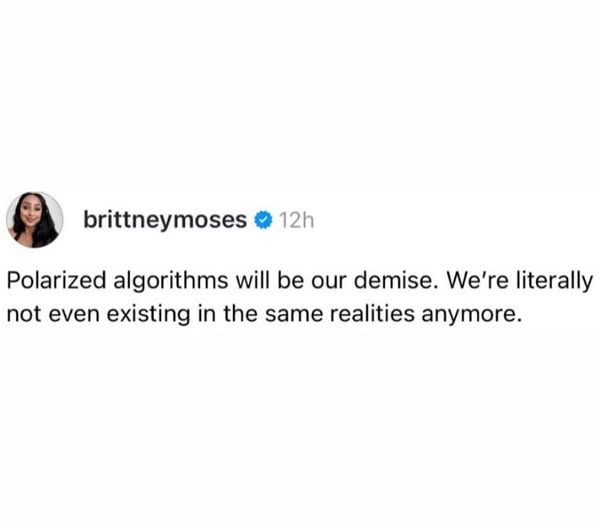
Modern research on disinformation and social media further illuminates the mechanisms of semantic terrorism. Scholars have shown that algorithmic systems create “echo chambers.” They also form “filter bubbles” that insulate users from diverse viewpoints.
The strategic use of emotionally charged and polarizing content is amplified by engagement-driven algorithms. These algorithms are designed to maximize user time on the platform.
This creates a fertile ground for the spread of hate-filled narratives. Coordinated campaigns thrive in this environment. Shoshana Zuboff (2019) details the concept of “surveillance capitalism” where human experience is commodified for profit and behavioral control. Peter Pomerantsev’s work in This Is Not Propaganda (2019) is also highly relevant here. He documents how political actors create a “surreal” information environment. The line between fact and fiction is intentionally blurred to disorient and control the public.
However, a crucial next step in this analysis is the development of a defense. Sander van der Linden’s work on inoculation theory in his book Foolproof (2023) offers a powerful counter-strategy. He suggests exposing individuals to weakened versions of manipulative arguments. This controlled exposure can build their mental immunity against real-world disinformation. This “prebunking” approach directly addresses the vulnerability that semantic terrorism preys upon. It offers a proactive method for building public resilience against psychological attacks.
5. Conclusion
Semantic terrorism is a dangerous and effective form of modern conflict. Its power lies in its ability to operate unseen, targeting the mind and the very essence of social cohesion. By leveraging personal trauma, political fragmentation, and digital tools like SEO, it systematically erodes trust and subverts democratic principles. The framework presented here, born from a personal journey, offers a necessary first step toward developing a defense. Understanding the mechanisms of semantic terrorism—from the “Poison Machine” to the use of emotionally charged keywords—is crucial. This understanding helps in reclaiming a space for honest discourse. It also protects both individual and collective well-being from this insidious form of linguistic violence. Further research is needed. Studies should explore its applications in other contexts. They should develop comprehensive strategies for a society now engaged in constant linguistic warfare.
References
- Baudrillard, Jean. The Spirit of Terrorism and Other Essays. Translated by Chris Turner. New York: Verso, 2003.
- Chomsky, Noam, and Edward S. Herman. Manufacturing Consent: The Political Economy of the Mass Media. New York: Pantheon Books, 1988.
- de Saussure, Ferdinand. Course in General Linguistics. Edited by Charles Bally and Albert Sechehaye. New York: Philosophical Library, 1959.
- Kahne, Daniel. Thinking, Fast and Slow. New York: Farrar, Straus and Giroux, 2011.
- Lifton, Robert Jay. Thought Reform and the Psychology of Totalism: A Study of “Brainwashing” in China. New York: Norton, 1961.
- Orwell, George. Nineteen Eighty-Four. Secker & Warburg, 1949.
- Pomerantsev, Peter. This Is Not Propaganda: Adventures in the War Against Reality. New York: PublicAffairs, 2019.
- Ricoeur, Paul. Time and Narrative. Vol. 3. Translated by Kathleen Blamey and David Pellauer. Chicago: University of Chicago Press, 1988.
- van der Linden, Sander. Foolproof: Why We Fall for Misinformation and How to Build a Defense Against It. New York: WW Norton & Company, 2023.
- Zuboff, Shoshana. The Age of Surveillance Capitalism: The Fight for a Human Future at the New Frontier of Power. New York: PublicAffairs, 2019.
- Sweller, John. “Cognitive Load Theory: The Human Cognitive Architecture.” The Psychology of Learning and Motivation 55 (2011): 37–58.
This video from YouTube, 8 Ways You’re Being Brainwashed (Lifton’s Thought Reform Explained), explains Lifton’s criteria in a simple way. It is accessible, which could be helpful for understanding the psychological mechanisms at play.act
 Leafy sees
Leave a Reply