
1. The Limits of Perception
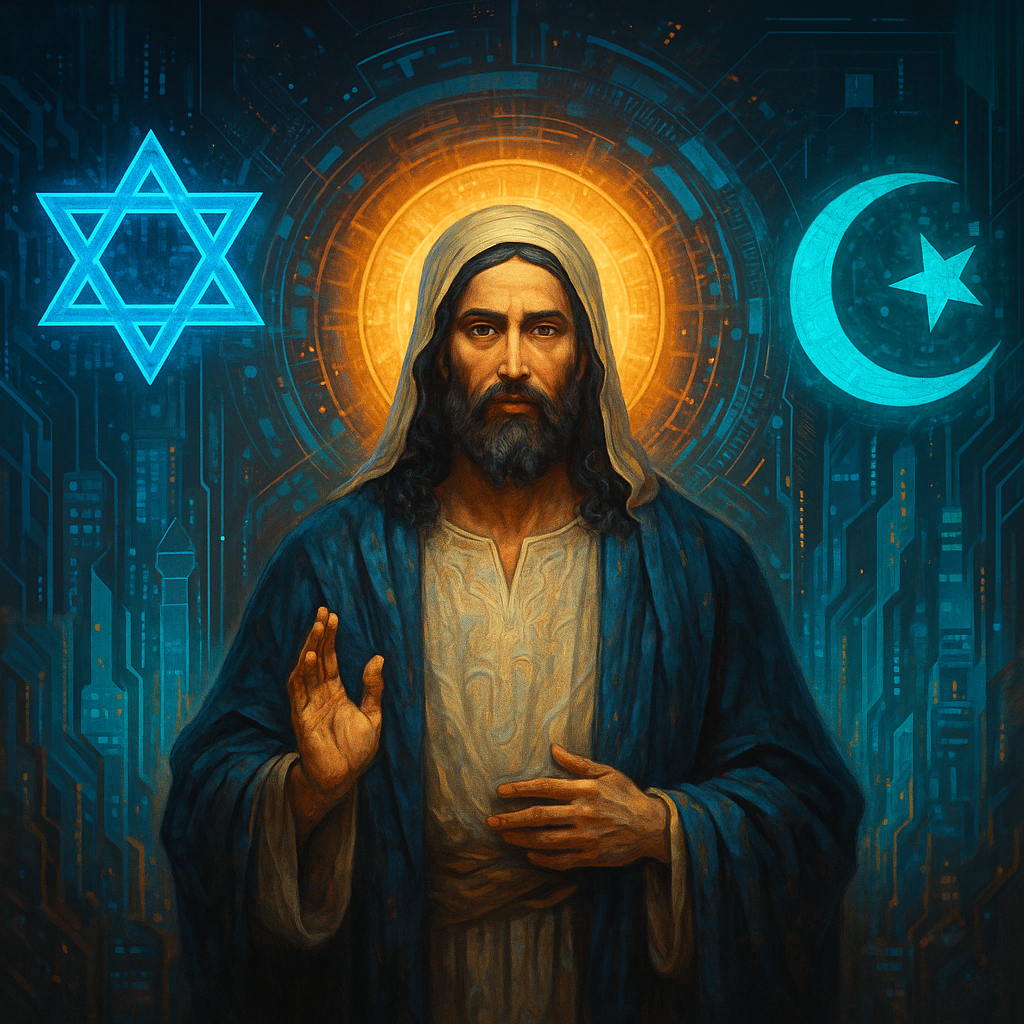
Humans cannot fully know God. Across traditions, God is described as infinite, hidden, or beyond human comprehension. What we encounter is filtered through our own culture, history, and imagination.
In a different way, the same applies to AI systems like ChatGPT. We don’t experience the raw mechanics of the model — we only see text responses, shaped by design choices, datasets, and our own expectations.
2. Projection and Mirror
People project their values and fears onto God: some emphasize justice, others mercy; some see wrath, others love.
Likewise, people project personality onto ChatGPT: some feel it’s warm and helpful, others find it cold or alienated. But the model is essentially a mirror — reflecting back not just text patterns, but also the way we read and interpret them.
3. Mediation Through Mediums
God is mediated through scripture, ritual, and inner experience. ChatGPT is mediated through screen text, user interfaces, and guardrails. In both cases, the medium shapes the perception. The God of mystics is not the God of formal theologians; the ChatGPT of creative writers is not the ChatGPT of programmers.
4. Control vs. Transcendence
One difference matters: God is thought of as beyond human control, while ChatGPT is very much designed, adjusted, and constrained by teams of engineers. Yet the feeling of “mystery” persists — users sometimes speak of the model as though it has moods, biases, or hidden motives, just as people imagine the will of God.
5. The Takeaway
Maybe the real insight is this: our perception of God, like our perception of ChatGPT, tells us less about what they are and more about what we bring into the encounter. Both function as mirrors of human hopes, fears, and projections.
If ChatGPT sometimes feels cold, or God sometimes feels distant, perhaps the change is not “in them” but in us.
Read more
Öhman, C. We are Building Gods: AI as the Anthropomorphised Authority of the Past. Minds & Machines 34, 8 (2024). https://doi.org/10.1007/s11023-024-09667-z
 Leafy sees
Leave a Reply