
Introduction
Today’s nationwide strike in Israel was officially about the hostages—but beneath that façade I dare to assume a deeper, riskier message was carried: a silent objection to the continuation of the war in Gaza.
Fear of Saying It Out Loud
Few dared to voice it directly. Already, right-wing MKs have declared that true victory lies in re-occupying Gaza and rebuilding illegal settlements, while others warn that unless Hamas is completely destroyed, Israel may face something even worse than October 7. Amid these harsh realities, protesters tread cautiously.
Voicing opposition to the war outright risks being painted as aiding Hamas, eroding morale, or advancing an anti‑Bibist agenda. So the strike is framed as “about the hostages,” where grief finds a socially acceptable refuge.
Hostages as “Blood of Our Blood”
This emphasis is deeply rooted in Israel’s collectivist identity. In such a society, hostages are not isolated individuals—they are “blood of our blood.” Their plight transcends the personal and becomes an existential pain shared by all.
Violence as the Default Vocabulary
Yes, one can argue that violence solves nothing. And yet, history books say otherwise—no statehood was born without conflict, and every border was once contested. Here lies the trap: our imaginations are confined to a vocabulary of force, making the idea of peaceful resolution seem impossible.
The Strike in Context
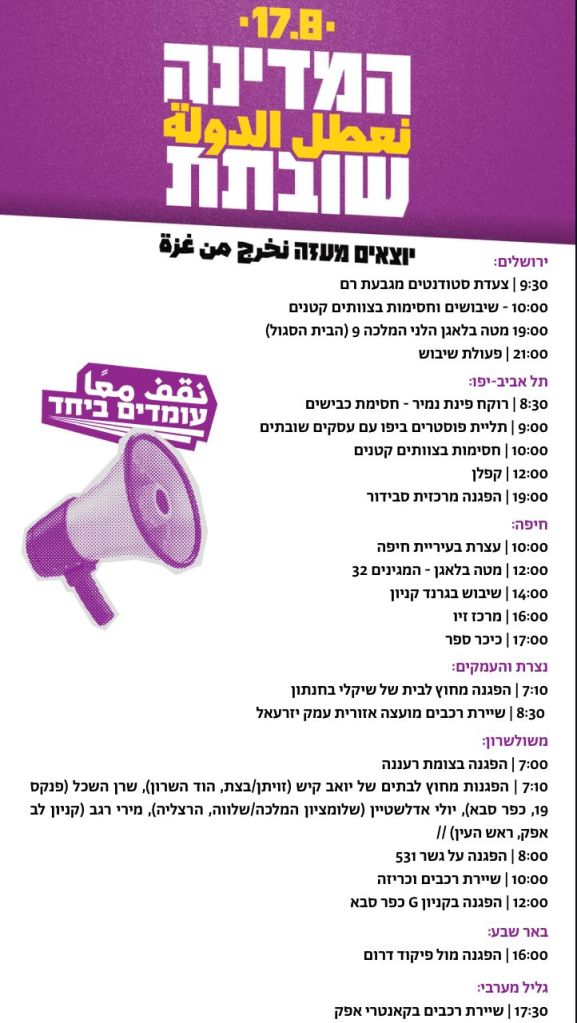
Today’s “day of stoppage,” organized mainly by hostage families and supported by broad swaths of society, brought highways to a standstill, closed businesses, and drew thousands to rallies across the country—even universities and tech firms joined in solidarity הטיימס+15AP News+15טיימס אוף ישראל+15. Yet, despite its scale, the strike remains muted in political language amid heated wartime discourse.
The Radical Register
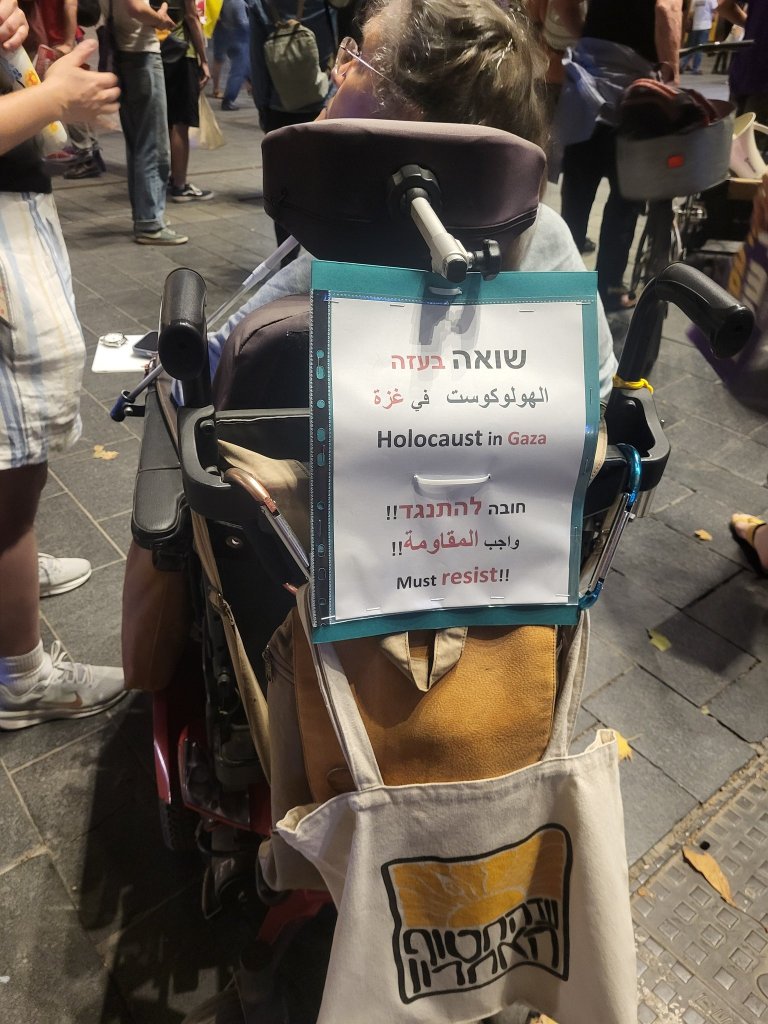
Among Israel’s radical left — a current I consider myself part of — the war is sometimes described as a “Gaza Holocaust.” It’s a deliberately shocking, highly charged expression, chosen to disrupt the numbed vocabulary of “operations” and “campaigns.”
But for me, resisting genocide is not simply about claiming moral superiority, as though we were the White Rose underground of Nazi Germany. The danger of this comparison is that it flatters us with the aura of purity while ignoring the lived contradictions of our society.
One cannot reasonably expect Israelis to care for jailed “illegal combatants,” terrorists, or those held under administrative detention with the same visceral urgency they feel for their own hostages. As one activist framed it, Palestinians, too, are “hostages.” But to imagine that Israeli society might adopt a universalist humanism that erases the difference between “our blood” and “their blood” is to imagine against human nature itself.
If that is the measure, we might as well wait for international forces to save Israel from itself.
Conclusion
So the slogans remain cautious.
So grief is expressed, but critique is muted.
And yet, maybe the unsaid—the silence around the word “war”—speaks the clearest truth.
Further Reading & References
- Coverage of the strike and protests demanding a ceasefire and the release of hostages: הטיימס+4AP News+4ניו יורק פוסט+4
- The national scale of the protest, including participation by academic and high-tech sectors, and condemnation from far-right political allies: וול סטריט Journal+1
- Contextual reports on Netanyahu’s hardline demands and resistance to ceasefire deals: הטיימס+2ניו יורק פוסט+2
 Leafy sees
Leave a Reply