
In our modern world, words can be weapons. Headlines, hashtags, and news cycles bombard us daily, shaping what we think and how we feel before we even realize it. This isn’t just a side effect of living in an information-saturated world — it’s what I call semantic terrorism: the deliberate use of language to manipulate minds.
Semantic terrorism is a mind control attack. It slips into our heads, subtly rewriting our beliefs and perceptions. It takes familiar words and twists them into ideological slogans or emotional triggers. It divides us into camps of “us” and “them,” good and evil — erasing the complexities that make us human.
I feel this especially when I look at media from all sides: Iranian state media, Israeli media, Western outlets — each with their own agenda, each trying to shape my mind. It’s exhausting, and sometimes it feels like there’s no safe space left to think for myself.
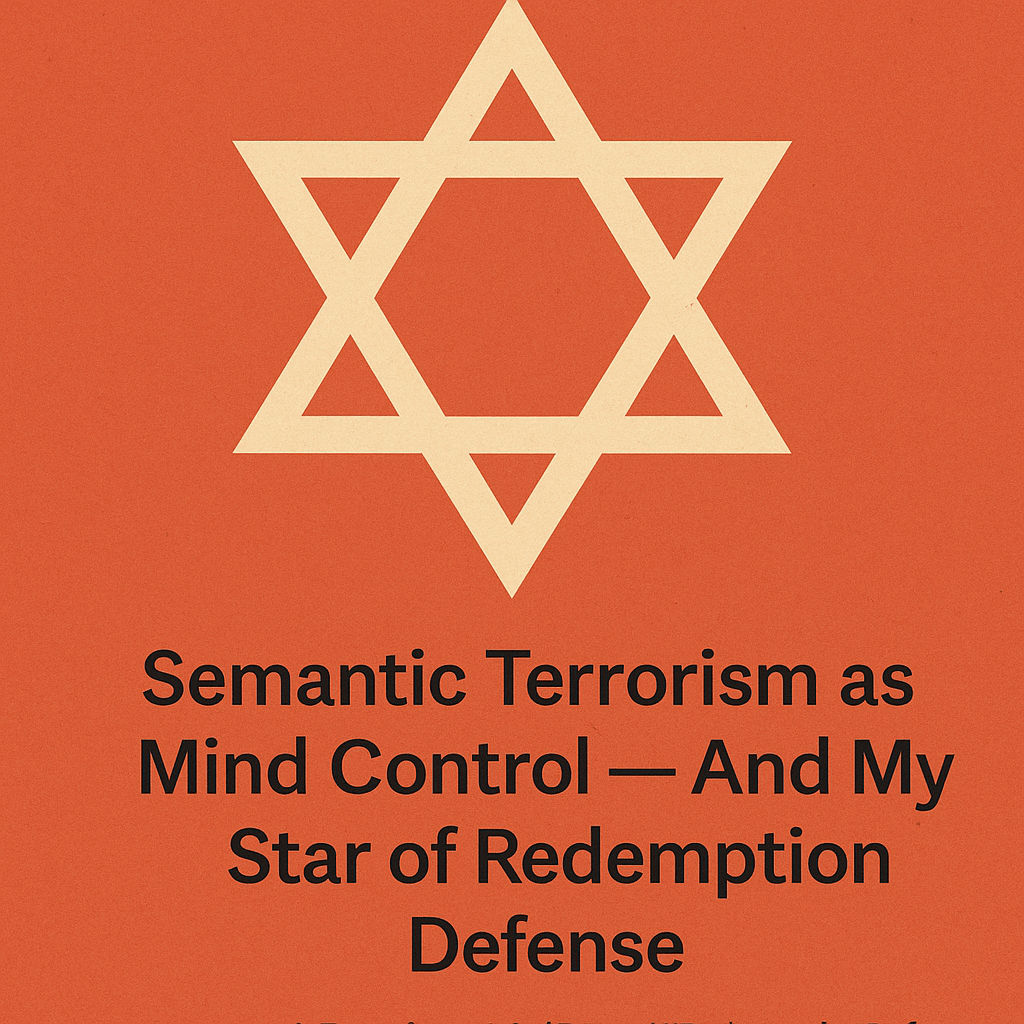
That’s where my Star of Redemption defense comes in. It’s inspired by Franz Rosenzweig’s philosophy, but for me, it’s also a deeply personal tool. The Star of Redemption isn’t just a six-pointed symbol; it’s a reminder of my interconnectedness — to my values, to my community, to my sense of self.
When I feel under siege by propaganda, I visualize this star shining around me. Each point of the star is a promise to myself:
🌟 Critical Thinking — I question every message, even the ones I want to believe.
🌟 Community — I stay connected to people who value nuance and dialogue.
🌟 Compassion — I refuse to let language dehumanize others.
🌟 Historical Awareness — I remember that semantic manipulation is an old weapon, always recycled.
🌟 Self-Awareness — I watch my own biases, knowing I’m as vulnerable as anyone else.
🌟 Higher Values — I hold on to my ethical compass, even when language is twisted.
The Star of Redemption reminds me that my mind is not a battlefield for someone else’s war. It’s a sacred space where meaning is created, not imposed.
In a world of semantic terrorism, that’s my defense — not a magic shield, but a living commitment to freedom of thought, compassion, and dignity.
 Leafy sees
Leave a Reply