
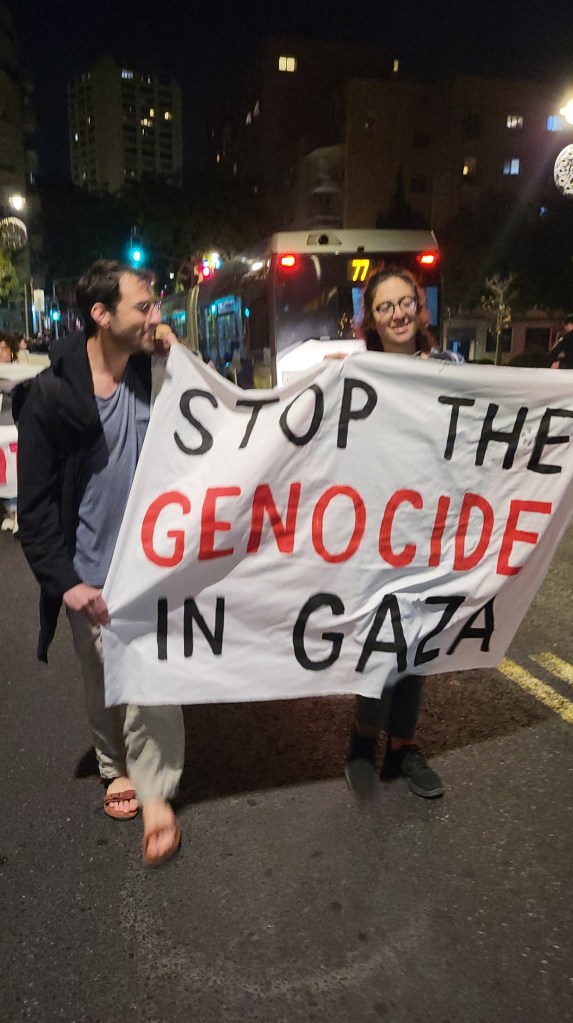
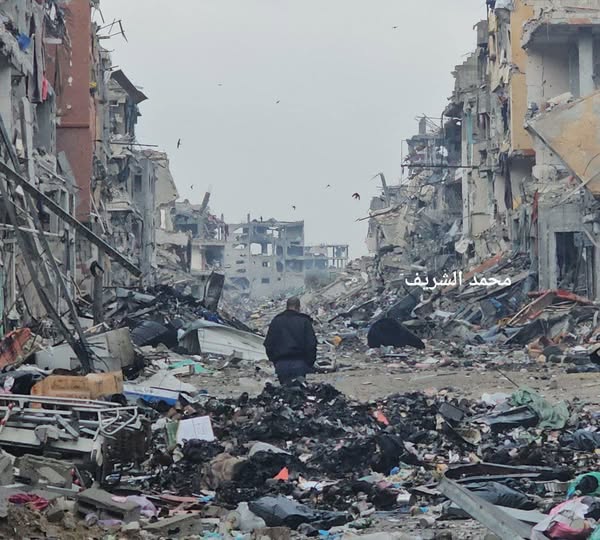
There are claims of genocide in Gaza. These reports are dismissed by the Israeli media but are widely circulated around the world. As an Israeli citizen, I can’t look the other way. I’ve read many testimonials from trusted sources. These include reports from doctors in Gaza and citizen journalists. They also include the accounts of Adi Argov, who documents the “uninvolved” children victims estimated in the tens of thousands. Neighborhoods reduced to dust. Destruction on an apocalyptic scale.
The scale of the devastation shakes me to my core. I also find myself grappling with a deep, personal conflict. How do I reconcile my horror at the atrocities in Gaza with the knowledge of my own community’s silence? Maybe my concern is selfish. I am terrified of how future generations will judge us. We stood still and did nothing to stop the massacre and the crimes against humanity. Have we become so desensitized to the deaths of others? What will be left of our own humanity?
The truth is, the anti-war voices in Israel are few. By my best estimation, we number no more than ten thousand. We are powerless in terms of political influence, hated and despised as traitors and a fifth column. But this isn’t about us. We are not the story.
The stories that matter are those of the people in Gaza. I think not only of the suffering of the dead but also of the unimaginable suffering of the living. Still, I cannot turn away from the images of the dead. Bodies of decapitated babies, organs torn apart. Fathers and mothers crying after losing all their children to the bombings. The faces of the children. The faces of the children haunt me the most.
I keep reading the reports, as if bearing witness or commenting make any difference. Attending anti-war protests every week feels like a try to ease my own conscience. The faces of the children that Adi Argov posts will never cease to haunt me.
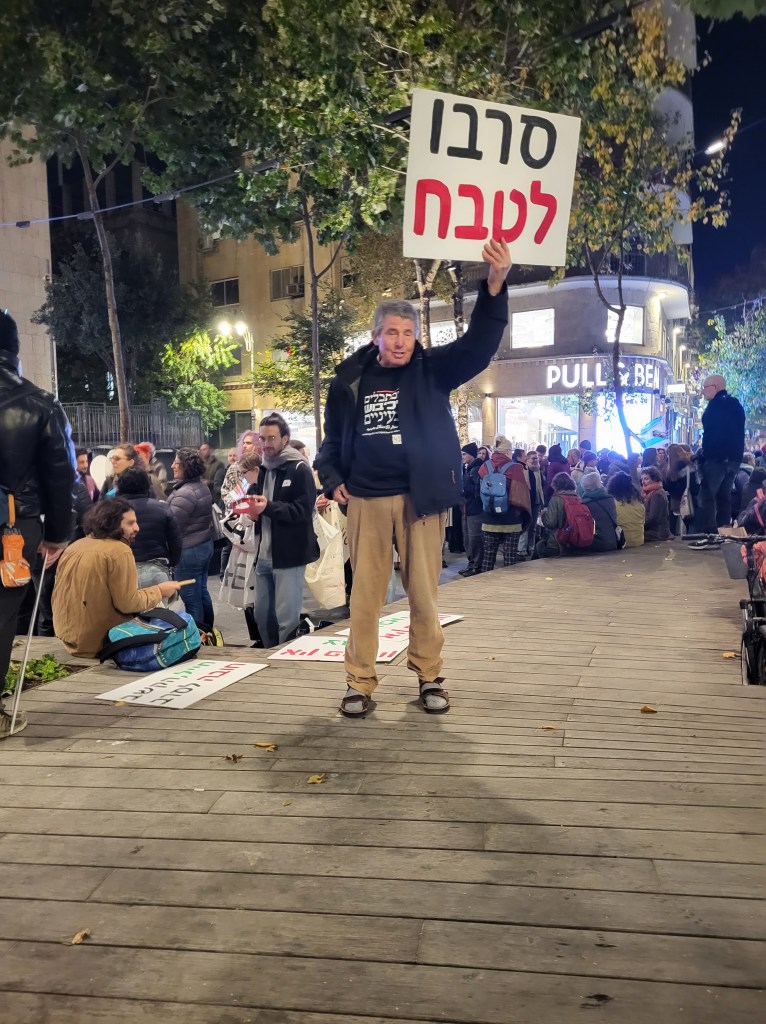
For the past four weeks, I’ve joined the anti-war bloc in the Jerusalem protests every Saturday night. I usually go with my partner. He watches my back because the protests sometimes escalate into violence. The violence can come from right-wing vigilantes or the police. This week, he couldn’t make it, so I was on my own.
As I was walking, I felt it: menorrhagia. Heavy period bleeding. Not even the heaviest tampon and pad together can contain it. Blood clots dropping out of me. I felt the sickening wetness crawling down my underwear. Within minutes, I realized the bleeding was uncontainable. I was about to stain a pair of pants I really liked. Walking became difficult. Yet, I continued to march with the anti-war bloc. I knew that within moments, I’d be more than just embarrassed.
I held a sign calling for a ceasefire, praying that no one would notice the stain. The blood grew heavier, pouring out of me. For a moment, I stopped thinking about the dead children. I thought instead of the women in Gaza. These women are alive and getting their periods without access to clean water to wash themselves. They also lack access to sanitary products.
As I marched, the relentless bleeding left me struggling to walk. It was just ten minutes, but it felt like an eternity. I thought of how unbearable those ten minutes were for me. I was in the middle of a city with access to clean water and hygiene products. I also had the choice to go home and clean myself up afterward.
Then my mind shifted to the women in Gaza. What does it mean to endure such discomfort every day in a war zone? To menstruate without access to clean water, sanitary products, or even a safe place to rest? To live in constant fear of bombings while struggling with basic human needs? To flee homes, run for miles, or hide in shelters? They are trapped midst rubble, powerless to their own bodies. This makes it even harder to look after their families.
If ten minutes of this discomfort felt unbearable to me, how can anyone survive it daily under such brutal conditions? This question haunts me as I think on the unimaginable reality of life in Gaza.
My own suffering was fleeting and insignificant, but it gave me a glimpse—just a fraction—of the challenges they must face. Even in protest, I had access to comforts and safety that women in Gaza can’t imagine. This moment of solidarity was brief, yet it stayed with me. It compelled me to see the stark inequalities in this war. I saw not just the loss of life. I also saw the loss of dignity in the everyday lives of those who survive.
What will we do with our privilege? Will we let it isolate us from the suffering of others? Or will we use it to amplify their voices and fight for change? How do we ignore these stories? How do we allow such suffering to persist?
It was just a ten-minute walk for me to recognize with them. Nothing more. A fleeting moment of solidarity.
It doesn’t matter—the sign I held, the embarrassment I felt, or the discomfort I endured. None of it makes a difference. It was just a way to hold on to my humanity in this war. But holding onto my humanity is not enough.
As an Israeli citizen, I urge you to be our voice. Help bring an end to this nightmare. Do whatever you can to stop this war without more casualties. Make sure that the pursuit of peace remains free from hatred and antisemitism. Let’s stop the war in Gaza so we can all start to heal. A diplomatic solution is essential.

 Leafy sees
Leave a Reply