
“Religious delusions, documented across diverse cultures worldwide, vary significantly in prevalence and are deeply influenced by cultural and economic contexts (Bhavsar & Bhugra, 2008). These delusions often center around profound religious themes and symbols, shaping their content and impact on individuals experiencing them (Drinnan & Lavender, 2006). For instance, religious hallucinations and delusions are common in individuals with major mental disorders, significantly affecting their diagnosis and treatment (Drinnan & Lavender, 2006).
In my personal journey rooted entirely in Israel, my fascination with Rumi’s poetry began at the age of 16, offering solace amid adolescent struggles. However, at 23, a traumatic sexual assault shattered my world. Despite legal efforts, justice eluded me, triggering a profound crisis that led to a suicide attempt. This dark period steered me towards activism, where I passionately advocated for human rights, particularly in the volatile contexts of Iran and Palestine. Engaging in protests in the West Bank exposed me to violence and turmoil, fueling my quest for peace through interfaith dialogue. This exploration prompted me to delve into the intersections of Islam and Judaism, finding resonance in shared spiritual practices and prayers in Arabic and Hebrew.
Understanding Arabic recitations revealed profound similarities in meaning with Hebrew counterparts, such as “La hawla wa la quwwata illa billah al-Ali al-Atheem,” translating to “Ezri me’im Hashem,” emphasizing divine assistance in times of need. Similarly, phrases like “Istaghfiru Allah al-Azim wa atubu ilayh” and “Hashivenu eleicha ve’nashuva” call for repentance and spiritual renewal across religious boundaries.
According to Jewish law, the Halakha, Jews are permitted to convert to Islam if their lives are in danger. This led me to ponder: why not consider converting to Islam while remaining Jewish? With the looming threat of another war, I keenly feel the potential for violence and suffering. I did not choose war; it was the reality into which I was born. Perhaps by accepting Muhammad as a messenger of God (Rasul Allah), we can find a path to peace. After all, aren’t we all messengers of Hashem (God)? Though we may not understand Hashem’s purpose for us, we are here nonetheless. I considered myself Sufi Jewish because I have encountered other Jewish people interested in Sufism. The way that those recitations are performed is meditative. I didn’t care much about sticking to the Shari’a (the Muslim law) or the Jewish Halakha. I eat kosher food and avoid drinking alcohol, though I have never fasted during Ramadan; instead, I have blessed Muslims with Ramadan Karim or shared an iftar meal with them.
- conclusion
- on October 7, 2023. Israeli retaliation claimed the lives of an estimated 34,000 Gazans. To assume that interfaith dialogue alone can prevent such tragedies may seem desperate, naive, and possibly delusional. A peaceful resolution for the Israeli-Palestinian conflict based on a shared belief in monotheism may be seen as a religious delusion within the cultural context of Israel, where both Islam and Judaism coexist. While others may believe they are reincarnations of Jesus or Buddha, my unique experience with religious delusion hasGot it. Here’s a revised ending for your post that highlights that point:
—
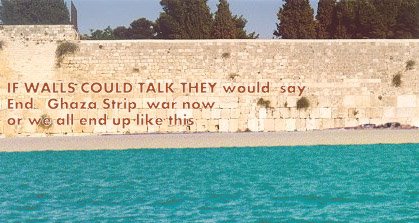
On October 7, 2023, Israeli retaliation claimed the lives of an estimated 34,000 Gazans. To assume that interfaith dialogue alone can prevent such tragedies may seem desperate, naive, and possibly delusional. A peaceful resolution for the Israeli-Palestinian conflict based on a shared belief in monotheism may be seen as a religious delusion within the cultural context of Israel, where both Islam and Judaism coexist. While others may believe they are reincarnations of Jesus or Buddha, my unique experience with religious delusion has shaped my understanding of the limitations of interfaith dialogue in resolving the deep-rooted and complex nature of the Israeli-Palestinian conflict.
 Leafy sees
Leave a Reply