
Blog Post: Human DDoS Attacks, Influence Operations, and the Israeli “Poison Machine”
Disclaimer:
The term “Human DDoS Attack” is used metaphorically. It describes the subjective experience of cognitive and emotional overload in the context of information warfare. This concept is based on personal observations and theoretical frameworks but lacks empirical validation. Readers should view this as a speculative interpretation rather than a scientifically proven phenomenon. If this metaphor resonates with you, I invite you to share your thoughts or similar experiences in the comments! Your insights are always welcome.
I am not an expert on influence campaigns, but I have experienced firsthand what I perceive as digital warfare.
My understanding of these concepts is influenced by my background as an Israeli citizen living through politically turbulent times. During the Judicial Reform turmoil, I noticed a systematic effort to flood social media with divisive content. This experience led me to create the term
“Human DDoS Attack”.
I used it to rationalize and communicate what I felt was happening on a cognitive and emotional level.
I often rely on research to expand my knowledge. I use resources from organizations like the Institute for National Security Studies (INSS). I also consult social media analysts like Fake Reporter, who document influence operations and disinformation campaigns. Their insights are invaluable in understanding how these digital strategies unfold on a larger scale.
Defining the Concept: What Is a Human DDoS Attack?
A Human Distributed Denial-of-Service (DDoS) attack is a metaphor I use. It describes the phenomenon of overwhelming an individual’s cognitive and emotional resources. This happens by bombarding them with excessive content. This content can include disinformation, emotionally charged narratives, and rapid messaging that creates decision fatigue, confusion, and emotional burnout.
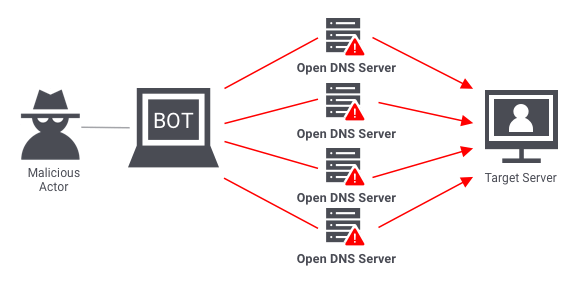
This concept is modeled after the technical term cyber DDoS attacks. Multiple systems flood the bandwidth of a targeted server. This renders it temporarily or permanently unavailable. Similarly, in a Human DDoS, the goal is to paralyze the target’s cognitive capacity. The attack disrupts their decision-making ability by overloading them with conflicting information. These two forms of attack are similar because they both aim for incapacitation. Incapacitation can target a server or a human mind.
Why Human DDoS Is Not Just “Information Overload”
The concept of information overload generally refers to an unintentional flooding of data. This is often caused by the rapid growth of digital content. It overwhelms one’s ability to process information effectively. While both Human DDoS and information overload share some similarities, Human DDoS attacks are intentional. They are malicious strategies designed to disrupt and confuse.
Key Distinction: The goal of a Human DDoS attack is not merely to overwhelm but to manipulate. Confusion is used as a tactic by overwhelming cognitive resources. It floods them with conflicting narratives and emotionally charged content. This makes it impossible for a person to discern truth from fiction. Human DDoS attacks align more closely with theories of information warfare. They also relate to psychological manipulation. It is not just a case of cognitive overload.
John Boyd’s Framework: The OODA Loop and Human DDoS Attacks
John Boyd’s OODA loop (Observe-Orient-Decide-Act) is a concept that originated in military strategy. It has since been applied to business, psychology, and digital warfare. It describes how individuals and organizations make decisions in complex, rapidly changing environments.
- Observe: Collect data and information about the environment.
- Orient: Analyze and synthesize the information to understand what’s happening.
- Decide: Formulate a course of action based on this understanding.
- Act: Implement the decision and observe the results.
Human DDoS attacks primarily disrupt the Orient phase. During this phase, an individual synthesizes and interprets information. They build a coherent understanding of reality. Attackers flood the mind with disinformation and emotionally charged content. This creates a state of cognitive paralysis. It makes it difficult for the target to move through the rest of the decision-making loop effectively.
This disruption results in a “freeze” state, pushing individuals into reactive, rather than proactive, decision-making.
Cognitive Load Theory: A Psychological Perspective
Cognitive Load Theory explains how our brains process information and why we can become overwhelmed. It suggests that our working memory has a limited capacity, much like trying to juggle too many balls at once. Our brain’s ability to process data is hindered when too much information is introduced too quickly. It is also hindered when tasks are too complex.
- Intrinsic Cognitive Load: The inherent difficulty of the material being learned.
- Extraneous Cognitive Load: Distractions and irrelevant information that complicate understanding.
- Germane Cognitive Load: Mental effort needed to integrate new information into existing knowledge.
Human DDoS attacks deliberately increase extraneous cognitive load, pushing the target’s mental resources to the brink. Imagine you’re already struggling to keep five balls in the air, and suddenly someone throws three more at you. Human DDoS attacks overwhelm your ability to filter out irrelevant content. They cause a breakdown in rational thinking.
Recommendations: Building Resilience
- Be Mindful About Your Social Media Interactions: Reflect on how the content you’re exposed to influences your emotions. Take time to consider this impact.
- Prebunking Techniques: Proactively expose yourself to common misinformation tactics so you can recognize them in real-time. This will make it easier to identify manipulative narratives before they take root.
- Establish Information Boundaries: Limit your exposure to conflicting narratives and reduce time spent consuming emotionally charged content.
Further Reading
- CNA Report on the Psychology of Disinformation
- Georgetown’s Center for Security and Emerging Technology (CSET)
- Oxford Academic Study on Cognitive Load
Conclusion
When I was young, I read the phrase, “Sticks and stones may break my bones.” Words will never hurt me. Today, I believe this quote is far from accurate, especially in the digital age. The work of Dr. Dan Siegel shows how sustained exposure to high-intensity communication can alter brain structures and emotional patterns. I now worry about Human DDoS attacks. Their relentless onslaught of conflicting and manipulative information might impact our cognitive health. It might also affect our resilience over time. If this resonates with you, please consider sharing your thoughts in the comments. I would love to hear from others who have experienced something similar or have insights to add.
 Leafy sees
Leave a Reply